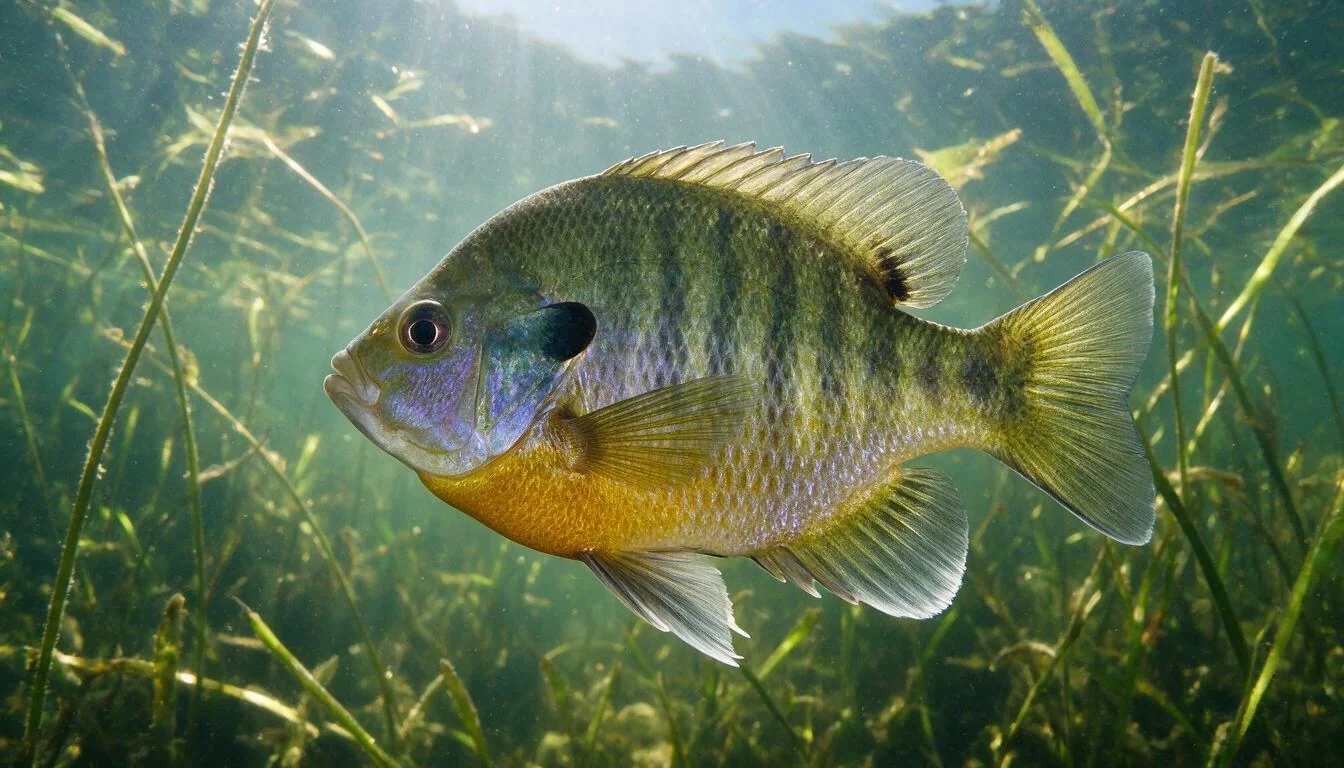
Bluegill: The Complete Species Guide
Ask any American angler about their first fish, and chances are it was a bluegill. These bright, scrappy panfish swim in nearly every pond, lake, and slow river in the country, bite anything small enough to eat, and put a bend in an ultralight rod that feels ten times their size.
Bluegill fishing is where millions of anglers start — and where plenty of seasoned ones keep going back. This complete bluegill species guide covers identification, behavior, US distribution, habitat, diet, size and records, the best ways to catch them, and how to cook them. New to fishing? Start with our fishing for beginners guide — the bluegill is the perfect first fish for exactly this reason.
Bluegill Identification: How to Recognize Them
The bluegill (Lepomis macrochirus) belongs to the sunfish family (Centrarchidae) — the same family as largemouth bass and crappie. It has the classic panfish shape: a deep, strongly compressed oval body built for quick turns in tight cover.
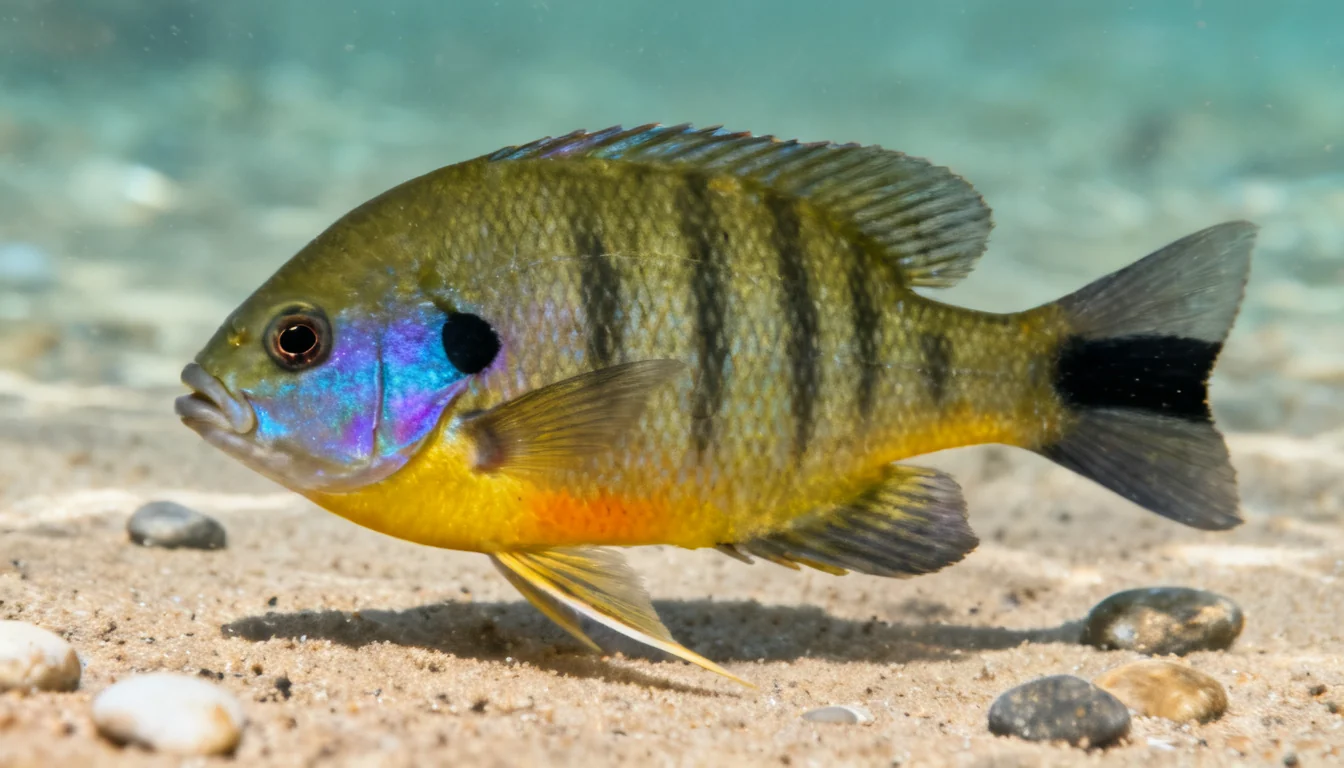
Field marks, from nose to tail:
- Color: olive-green back that shades into a yellow-orange breast and belly
- Vertical bars: 6-8 faint dark vertical bars along the sides
- Ear flap: a rigid, jet-black flap (the operculum) on the gill cover — the single best ID feature
- Dorsal blotch: a dark smudge at the rear base of the soft dorsal fin
- Sheen: an iridescent blue-purple glow on the cheeks and gill area — the source of the name
- Pectoral fins: long and pointed, reaching well past the eye when folded forward
Bluegill vs other sunfish: the black ear flap separates bluegill from redear sunfish (red-orange border on the flap) and pumpkinseed (wavy orange lines on the cheek and gill). Bluegill also lack the heavy spotting and mottling that marks crappie and pumpkinseed; for the full family picture including the other classic panfish, see our how to catch crappie guide.
Bluegill Behavior & Habits
Daytime feeders. Unlike many species that feed at dawn and dusk only, bluegill are active all day. They cruise shallows, pick insects off the surface, and patrol weed beds whenever the sun is up — which makes them one of the few fish you can catch reliably at midday.
Schooling fish. Bluegill gather in loose schools, usually sorted by size. Find one and you'll usually find a dozen more nearby, though the biggest bluegill often hang alone or in small groups just outside the main school.
Colony spawners. When water temperatures reach the mid-60s to low 70s (°F) in late spring and early summer, males fan saucer-shaped nests in the shallows, often in groups of dozens on the same stretch of sand or gravel bottom. Males turn brighter — nearly orange and blue — and guard the nest fiercely. A hook dropped into a spawning bed is usually hit within seconds, which is why spring is the easiest bluegill fishing of the year.
Bluegill Habitat: Where They Live
Bluegill habitat is everywhere warm water and weeds meet. Native to the eastern and central United States and the Mississippi River basin, bluegill have been stocked so widely that they now live in all 48 contiguous states — plus parts of Canada, Mexico, Europe, and beyond.
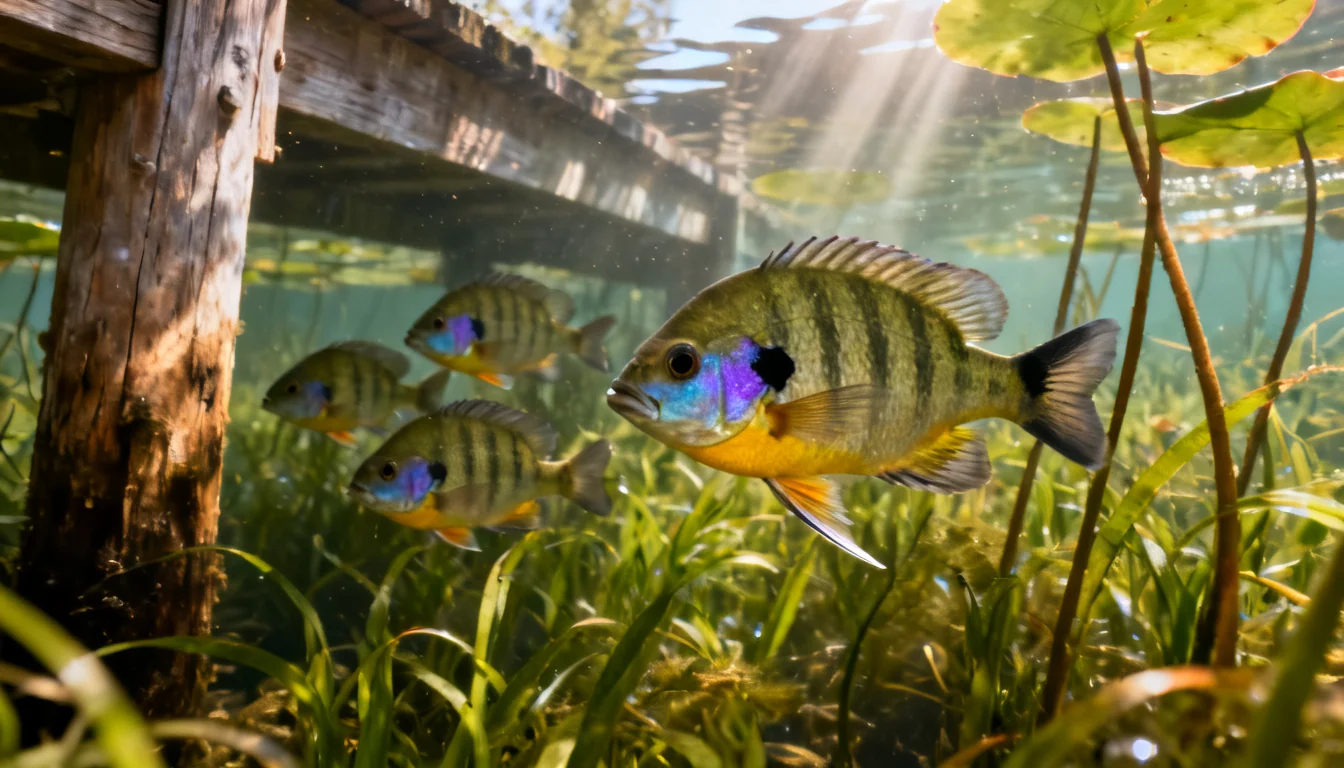
Their ideal home is a warm, vegetated lake or pond:
- Weed beds and grass lines, where they hide and feed
- Docks, piers, and boathouses with shade and structure
- Lily pads and floating vegetation
- Fallen trees, brush piles, and overhanging branches
- Shallow, slow-moving river backwaters
Bluegill rarely chase water deeper than they need to. In summer, when shallow water gets too warm, they slide out to the deep edge of the weed line — usually 8-15 feet — but they always stay close to cover. A pond with weeds and a dock is basically a guaranteed bluegill factory.
What Do Bluegill Eat?
What do bluegill eat? In one word: everything small. Bluegill are opportunistic feeders with small mouths, and their diet is a catalog of everything tiny that lives in or near the water:
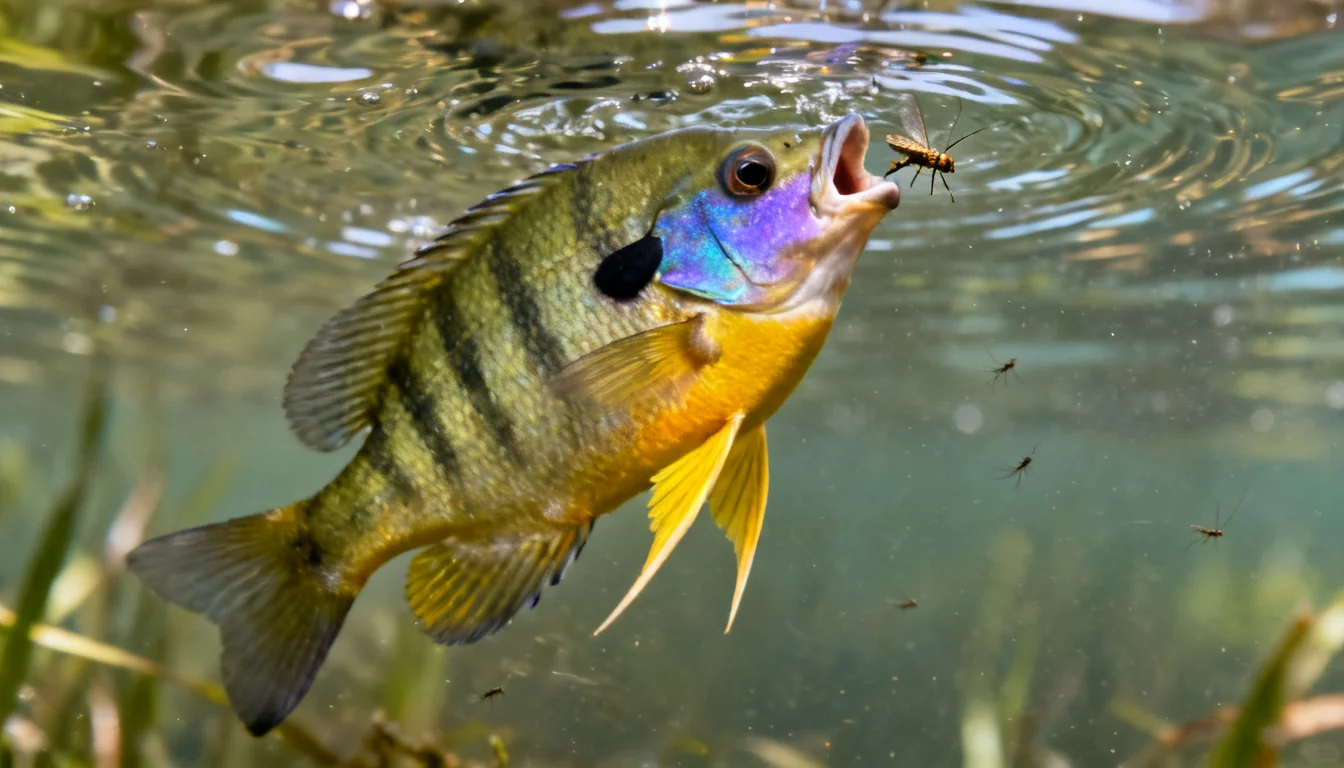
- Aquatic insects — mayflies, caddisflies, dragonfly nymphs, and midge larvae
- Terrestrial insects — grasshoppers, crickets, ants, and beetles that fall into the water
- Small crustaceans — scuds, tiny crayfish, and freshwater shrimp
- Worms and snails — bottom-dwelling favorites
- Zooplankton — the main food of fry and young bluegill under 2 inches
- Occasional small minnows — the biggest bluegill will eat them
This insect-heavy diet is why bluegill bite so readily: they're wired to grab small, moving morsels all day long, and a worm or cricket looks exactly like their natural food.
How to Catch Bluegill
The complete tactics are in our companion guide — How to Catch Bluegill — but the short version is beautifully simple:
- Use ultralight gear. A light rod, 2-6 lb line, and small hooks (#6-#10) are standard.
- Fish shallow. Bluegill spend most of their time in 1-6 feet of water near cover.
- Use live bait or tiny lures. Worms, crickets, mealworms, small jigs, and poppers all produce.
- Fish a bobber. A small float set 1-3 feet deep presents bait at exactly the right level.
- Have patience with kids. This is the fish that turns children into anglers.
Bluegill Size: How Big Do They Get?
Bluegill size depends mostly on the water they live in. In an average pond, bluegill grow to 4-6 inches in their first couple of years and top out around 7-8 inches. Bigger lakes with better forage push them further.
- Typical catch: 4-8 inches, a few ounces to 1/2 lb
- A nice fish: 8-10 inches, about 1 lb — worth a photo in any state
- A trophy: 10+ inches; a 1.5-2 lb bluegill is a genuine wall-hanger
- World record: 4 lb 12 oz, caught at Ketona Lake, Alabama, in 1950 — a fish so far beyond normal that it's still the standard nearly 80 years later
State records commonly fall between 2 and 3.5 lb. Bluegill live 5-6 years on average and can reach 10+, though growth depends heavily on the pond. In waters where bluegill are under-fished, the classic stunting pattern takes over: too many fish competing for the same food means nobody grows, and a pond ends up packed with 4-6 inch bluegill.
Harvesting a few dozen keeps the population balanced — and lets the survivors reach true size.
Are Bluegill Good to Eat?
Yes — bluegill are some of the best-eating fish in freshwater. Their fillets are white, firm, flaky, and mild, with no strong fishy taste, which makes them a favorite for kids and adults alike. They're perfect pan-fried whole or filleted, and they also grill and bake well.
Most states have generous bluegill limits (often 25-50 per day) because the fish are so abundant — though a few enforce size limits designed to protect the biggest spawners, so check your local regulations before you keep fish. When you're ready to cook your catch, our bluegill recipes collection covers cleaning, filleting, and the classic panfish preparations.
Bluegill FAQ
How long do bluegill live?
Bluegill typically live 5-6 years, though fish in northern lakes with slower growth can reach 10 years or more. The oldest recorded bluegill lived to about 11.
Do bluegill bite at night?
Yes, but not as eagerly as during the day. Bluegill are daytime feeders, so the best bite is from mid-morning through late afternoon. Night fishing with a light and worms can work in summer, but you'll usually catch more before dark.
What is the best bait for bluegill?
Live bait wins: redworms, nightcrawler pieces, crickets, and mealworms are the proven top baits. Small jigs (1/32-1/16 oz) with 1-2 inch soft plastic bodies, tiny spinners, and fly-rod poppers also catch them consistently.
Are bluegill good for beginners?
Bluegill are arguably the best beginner fish in America: they're abundant, bite aggressively, live close to shore, and fight surprisingly hard on light tackle. A bobber, a worm, and a small hook is a complete starter setup.
Do bluegill eat bass eggs?
Occasionally — bluegill are known nest raiders and will eat the eggs and fry of largemouth bass when they find an unguarded nest. Bass anglers and bluegill anglers have a long, friendly rivalry over exactly this habit.
What is the difference between bluegill and sunfish?
"Sunfish" is the family name (Centrarchidae) that includes bluegill, redear, pumpkinseed, and many other species. "Bluegill" is one specific species within that family. All bluegill are sunfish, but not all sunfish are bluegill — which is why the black ear flap and dorsal blotch matter for identification.
The Bottom Line
The bluegill is the everyman fish of American freshwater: found in all 48 states, easy to identify, simple to catch on light tackle, and genuinely delicious on the plate. They bite all day, school up in the shallows, and spawn right where anyone can reach them.
Grab an ultralight rod, a bobber, and a container of worms — the nearest pond with a weed bed and a dock probably holds hundreds of them. It's the fish that starts a lifetime of angling, and it never stops being fun.